
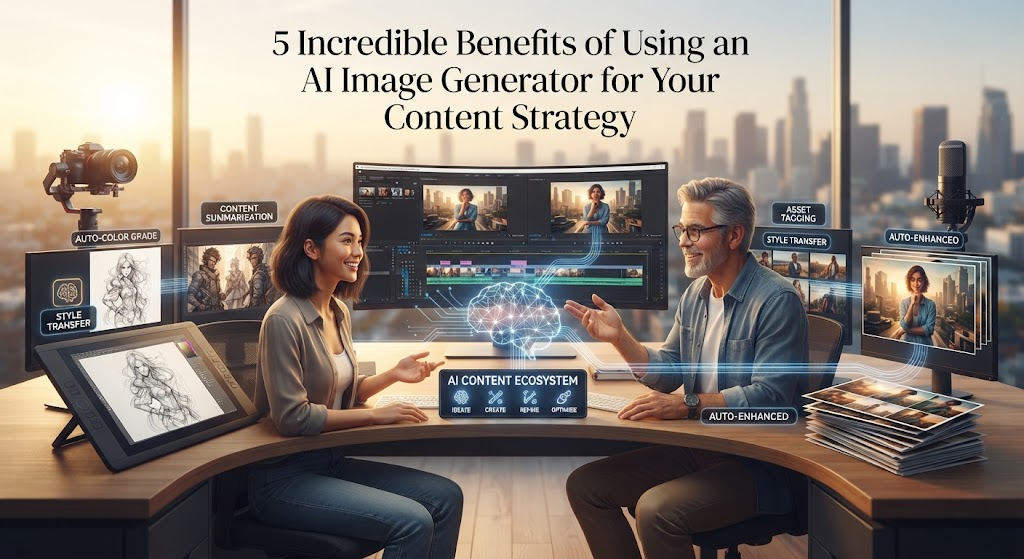
In today’s fast-paced digital landscape, compelling visual content is no longer just an optional add-on; it is the cornerstone of effective communication. From engaging social media posts to comprehensive blog articles and high-converting landing pages, visuals play a critical role in capturing audience attention. However, sourcing the right images has traditionally been a time-consuming and expensive process.
Relying on generic stock photos can make your brand look unoriginal, while hiring professional illustrators or photographers for every campaign can quickly deplete your marketing budget.
Fortunately, the rapid advancement of artificial intelligence has revolutionized how creators and businesses approach visual design. By leveraging a state-of-the-art AI image generator, anyone can produce stunning, high-quality graphics in a matter of seconds.
Whether you are a solo entrepreneur, a digital marketer, or a creative professional, integrating this technology into your workflow offers unparalleled advantages. Here are five incredible benefits of using AI-driven image generation for your content strategy.
1. Rapid Prototyping and Concept Visualization
One of the most significant challenges in any creative project is translating an abstract idea into a tangible visual representation. When collaborating with clients or design teams, conveying the exact mood, lighting, and composition of a concept can lead to endless revisions and misunderstandings.
AI generation tools completely eliminate this friction by allowing you to rapidly prototype concepts. Instead of spending hours sketching storyboards or creating complex mockups in graphic design software, you can simply type a descriptive text prompt and generate multiple variations of an idea instantly.
This rapid visualization process ensures that all stakeholders are aligned on the creative direction before any serious time or money is invested in the final production. It bridges the gap between imagination and reality, enabling creators to experiment with different visual layouts at lightning speed.
2. Cost-Effective Asset Creation for Marketers
For small businesses, independent creators, and marketing agencies, maintaining a consistent stream of high-quality visuals is a massive financial burden. Subscriptions to premium stock photography websites are expensive, and licensing exclusive rights to specific images can cost hundreds or even thousands of dollars. Furthermore, organizing professional photoshoots requires coordinating photographers, models, locations, and editing teams.
Using artificial intelligence to generate your visuals drastically reduces these operational costs. You can create bespoke, commercial-grade images without ever leaving your desk.
Because the generated artwork is unique to your specific prompts, you do not have to worry about a competitor using the exact same stock photo in their advertising campaign. This democratizes high-end visual production, allowing brands with smaller budgets to compete aesthetically with large corporations that have dedicated in-house design departments.
3. Endless Creative Possibilities and Style Adaptability
Traditional content creation is often limited by the physical constraints of reality or the specific skill set of a single artist. If you need a hyper-realistic photograph of a futuristic city, a watercolor painting of a whimsical forest, and a sleek 3D render of a tech product, you would typically need to hire three different specialists.
Artificial intelligence removes these boundaries by offering infinite stylistic versatility. A robust generation tool can effortlessly switch between artistic mediums, allowing you to produce oil paintings, vintage film photography, minimalist vector graphics, or detailed anime-style illustrations with just a few adjustments to your text prompt.
This adaptability is invaluable for content creators who manage multiple brands with distinct visual identities. You can tailor your aesthetics perfectly to suit different platforms, campaigns, or target demographics without compromising on quality or turnaround time.
4. Streamlining Social Media and Blog Publishing
Consistency is the key to mastering social media algorithms and keeping your website audience engaged. However, the pressure to publish fresh, visually appealing content every single day can easily lead to creator burnout. Finding or creating the perfect featured image for a blog post or an eye-catching thumbnail for a video often delays the publishing schedule.
Integrating AI-generated imagery into your daily workflow completely streamlines the publishing process. If you are writing an article about the future of renewable energy, you no longer have to spend an hour searching for the perfect image of a solar panel farm. You can simply prompt the AI to generate exactly what you need in seconds. This allows content managers, social media strategists, and writers to maintain a high-volume publishing cadence without sacrificing the visual integrity of their posts.
5. Overcoming Creative Block and Enhancing Inspiration
Every artist, writer, and marketer inevitably faces a creative block. Staring at a blank canvas or an empty editorial calendar can be incredibly frustrating when the ideas simply refuse to flow. Sometimes, all it takes to break through that mental barrier is a spark of unexpected inspiration.
AI generation tools serve as an exceptional collaborative partner for brainstorming. By inputting random, surreal, or highly specific combinations of words, you can prompt the machine to generate unexpected visual interpretations that you may never have conceived on your own.
Seeing these unique, machine-generated concepts can trigger new ideas, push your creative boundaries, and inspire entirely new marketing angles or artistic projects. The technology acts not just as a production tool, but as a catalyst for human creativity.
Frequently Asked Questions (FAQs)
How does an AI generation tool actually work?
These tools utilize advanced machine learning models that have been trained on vast datasets of images and their corresponding text descriptions. When you input a text prompt, the AI understands the semantic meaning of your words and synthesizes a completely new image pixel by pixel that matches your description.
Can I use generated images for commercial purposes?
In most cases, yes. Many leading AI platforms allow users to utilize their generated images for commercial projects, including marketing campaigns, website design, and merchandise. However, it is always crucial to review the specific terms of service and licensing agreements of the individual platform you are using to ensure compliance.
Do I need design skills to get good results from these tools?
No traditional design or drawing skills are required. The primary skill needed is “prompt engineering” the ability to write clear, descriptive, and detailed text instructions. The more specific you are about lighting, artistic style, and composition in your prompt, the better your final results will be.
Will the generated images look too artificial or fake?
Early iterations of the technology sometimes struggled with realism, but modern generators are incredibly sophisticated. By using specific prompts that request “photorealistic,” “cinematic lighting,” or “8k resolution,” you can generate images that are practically indistinguishable from professional photography.
How can I ensure my generated images match my brand’s style?
To maintain brand consistency, you should develop a set of specific keywords that define your visual identity (e.g., “minimalist,” “pastel colors,” “flat vector art”). By consistently including these stylistic keywords in all of your text prompts, the AI will generate images that seamlessly align with your established brand aesthetic across all of your content channels.
Conclusion
The integration of artificial intelligence into the creative process marks a profound shift in how we produce and consume visual media. By utilizing prompt-driven imagery, creators can bypass traditional bottlenecks related to time, budget, and technical skill.
From rapid prototyping and cost-effective asset creation to boundless stylistic versatility and streamlined publishing, the benefits are undeniably transformative. Embracing this technology does not replace human ingenuity; rather, it amplifies it, providing a powerful digital assistant that empowers you to bring your most ambitious visual concepts to life with unprecedented ease.